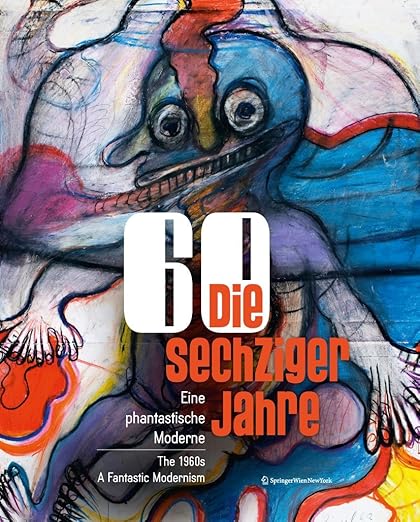
From 1960 to 1969, the City of Vienna acquired around 3,100 works of art, and almost 500 mosaics, sculptures and playground sculptures were created.
Volume 2 of the catalogue series on the history of the collection presents all the works of art in a catalogue raisonné with 800 large-format colour illustrations. In addition, text contributions provide insights into the architecture, literature and art that shaped this decade: from the ‘Vienna School of Fantastic Realism’ and the literary ‘Vienna Group’ to Viennese Actionism, which culminated in the 1968 ‘Art and Revolution’ campaign.
Following its documentation of the 1950s, MUSA continues its examination of the City of Vienna's collection of contemporary art with an exhibition and catalogue. From 1960 to 1969, 3,800 works of art were purchased and 460 works were realised in connection with construction projects (‘art in construction’). Supplemented by later acquisitions and donations, the total inventory currently amounts to approximately 4,300 works of art. In the public consciousness of the decade, the ‘Vienna School of Fantastic Realism’ ranked unchallenged at the top. In addition, there were numerous variations of abstraction and realism, and the ‘Wirklichkeiten’ group set new accents from 1968 onwards. Today, the then controversial ‘Vienna Actionism’ is considered the most important contribution to the international avant-garde. Berthold Ecker describes the history of the collection and the acquisition policy of the 1960s, while Wolfgang Hilger, as a contemporary witness, provides an insight into the Viennese art scene. Bernhard Denscher examines Austrian cultural policy, which fluctuated between stagnation and change. Monika Platzer examines ‘art in architecture’ as a reflection of a communication process, while Elisabeth Voggeneder places Austrian positions in the context of international trends. Theresia Hauenfels offers a chronological and cultural-historical overview of this decade of change. After documenting the 1950s, this MUSA exhibition and catalogue continue the chronological tour of the collection of contemporary art held by the City of Vienna. From 1960 to 1969, approximately 3,800 works were acquired, and 460 objects were realised as part of its ‘art in architecture’ scheme. Later acquisitions and donations to the collection have brought its holdings in art to approximately 4,300 works. In the public perception of this decade, the ‘Viennese School of Fantastic Realism’ reigned supreme. In addition, there were numerous variants of abstract art and realism; from 1968 on, the group ‘Wirklichkeiten’ championed fresh ideas. The most widely recognised contribution to the international avant-garde is the work of the Viennese Actionists, which was highly controversial at the time. Berthold Ecker describes the history of the collection and the acquisition policies of that decade; Wolfgang Hilger draws on his personal memories to offer first-hand insights into the Viennese art world of the era. Bernhard Denscher's contribution discusses Austrian cultural policies of the decade, which wavered between stagnation and new beginnings.
Monika Platzer sheds light on “art-in-architecture” as a reflection of a communicative process; Elisabeth Voggeneder examines Austrian positions in the context of international tendencies. Theresia Hauenfels’s essay offers a general history of this decade of change, highlighting important cultural developments.