Fluxus Subjektiv was published in 1990 on the occasion of the exhibition of the same name and the Fluxus actions at Galerie Krinzinger in Vienna.
The exhibition ran from 21 September to 3 November 1990 and is one of the important Austrian presentations that approached Fluxus not only as a historical phenomenon, but as a living, performative, and subjective practice. KUNSTFORUM International described the project explicitly as a “Fluxus exhibition and Fluxus concert” at Galerie Krinzinger.
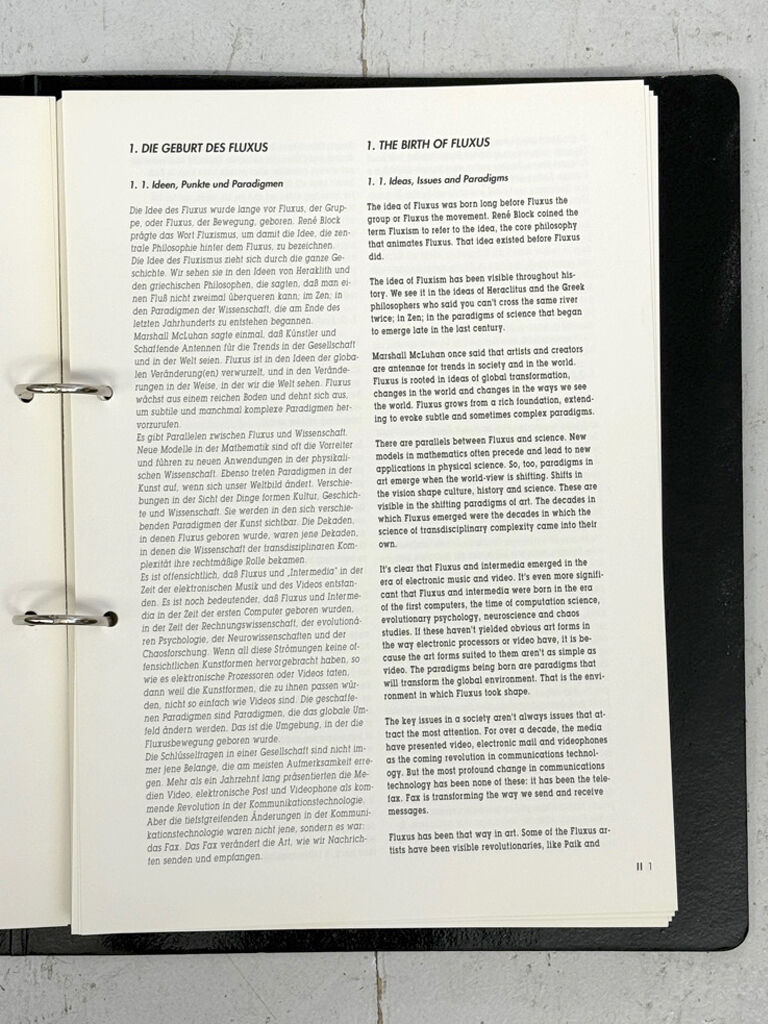
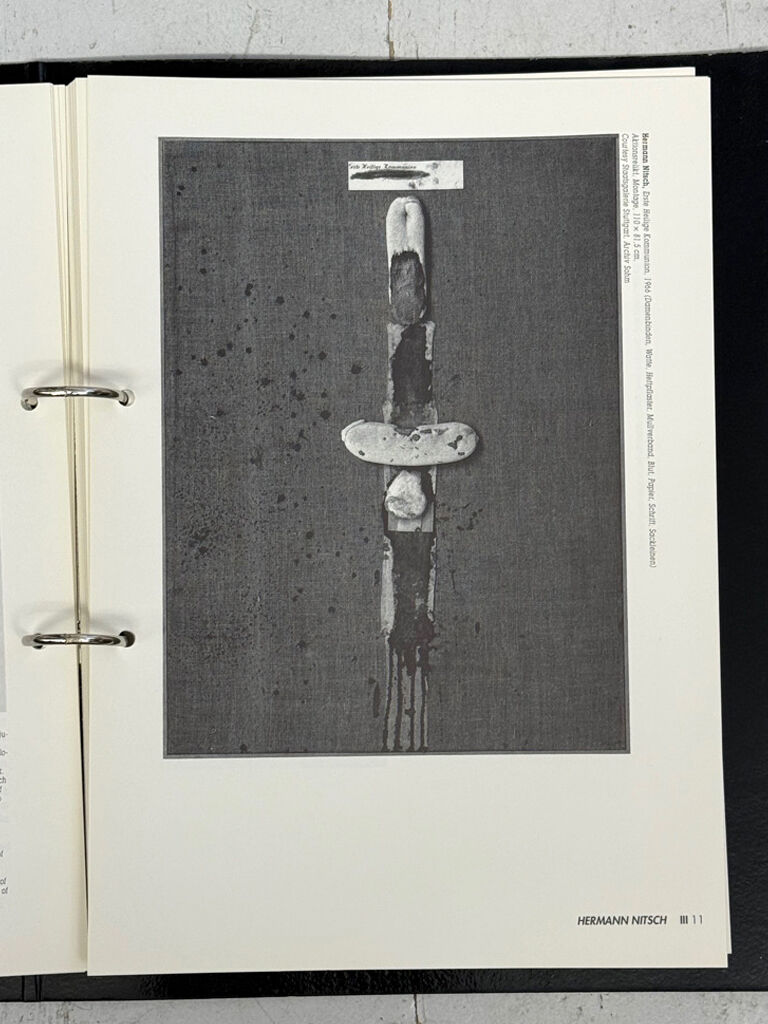
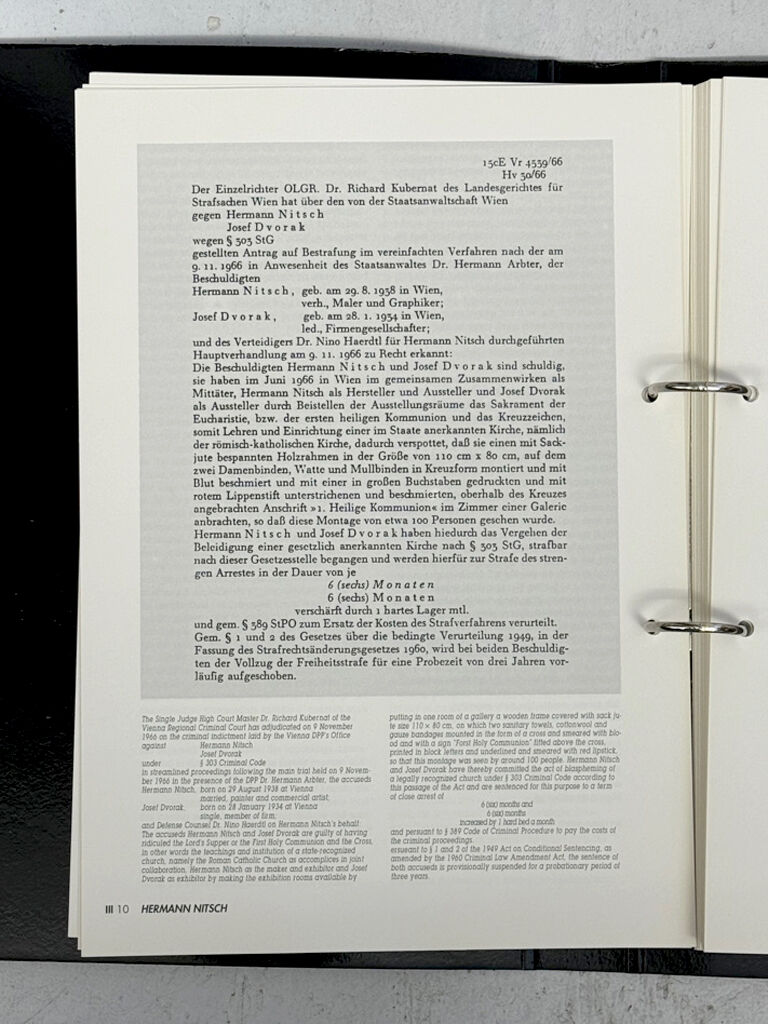
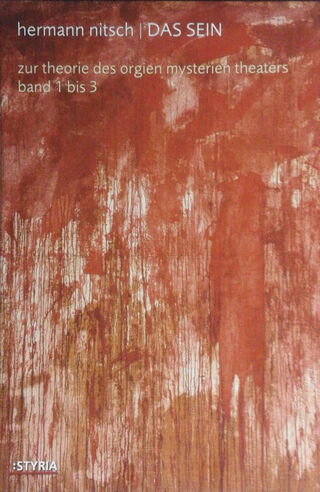
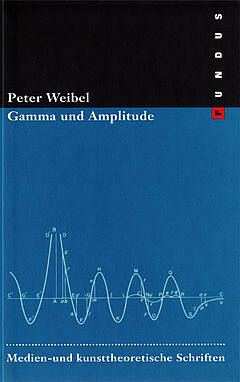
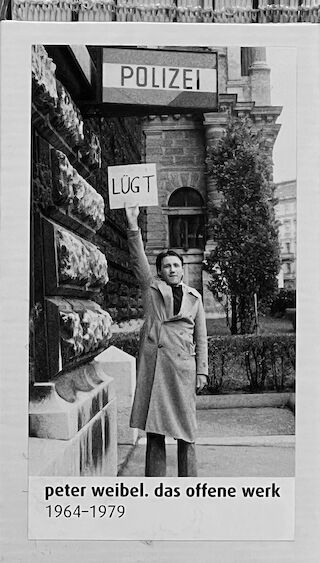
The catalogue is conceived less as a conventional exhibition book than as a polyphonic Fluxus document. It brings together contributions by, among others, Ken Friedman, Hermann Nitsch, Ben Vautier, Milan Knížák, Francesco Conz, and Peter Weibel. Artpool lists the volume as a publication edited by Ursula Krinzinger in 1990, with approximately 200 pages, illustrated in black and white, and names several included texts, among them contributions by Francesco Conz, Henry Martin, Hermann Nitsch, Ben Vautier, and Peter Weibel.
The material form of the catalogue is also central to its content. It was issued as a ring binder, in a format of approximately 32 × 26 cm. This open, not definitively bound form corresponds to the character of Fluxus as a process-based, expandable, and non-closed practice. Antiquarian descriptions refer to the volume as consisting of several separately paginated sections and as being presented in its original ring binder.
In terms of content, Fluxus Subjektiv offers a perspective on Fluxus that is less concerned with a linear art-historical narrative than with voices, actions, documents, attitudes, and personal positions. The title points precisely to this approach: Fluxus appears here not as a closed style or historical movement, but as a field of subjective contributions, performative gestures, and artistic connections. The catalogue is therefore not only a documentation of an exhibition, but itself part of the open forms of publication and action that shaped Fluxus.