
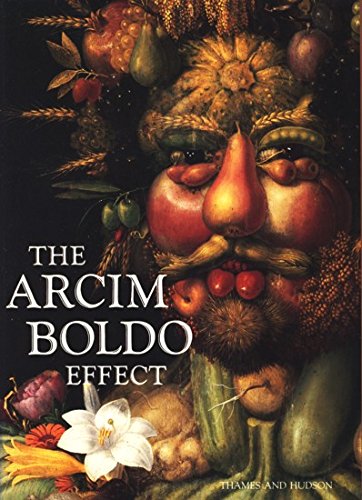
Soft Cover, English, Glue Binding, 402 Pages
The Arcimboldo Effect
The Arcimboldo Effect examines the enduring fascination with composite imagery and visual transformation inspired by the work of
Giuseppe Arcimboldo. Arcimboldo’s sixteenth-century portraits—constructed from fruits, vegetables, animals, and objects—serve as a historical point of departure for a broader investigation into perception, illusion, and the instability of form.
The publication traces how Arcimboldo’s strategies of assemblage and metamorphosis resonate across art history and into modern and contemporary practices. It explores the psychological and optical dimensions of composite images, in which figures oscillate between legibility and abstraction, recognition and disorientation. What appears coherent at first glance dissolves into fragments upon closer inspection.
By bringing together historical analysis and examples from later artistic movements, The Arcimboldo Effect positions Arcimboldo not as an eccentric exception, but as a precursor to Surrealism, conceptual strategies of perception, and contemporary image cultures. The book highlights how visual ambiguity, play, and transformation continue to shape artistic approaches to representation and meaning.